
Your audience decides in the first thirty seconds whether your event is worth their time. The stage is the first thing they see, and it tells them what kind of experience to expect before anyone speaks.
For business owners hosting live events, whether that’s a women’s leadership summit, a client appreciation night, or a multi-day conference, stage design is one of the highest-impact and most underestimated investments. Below are twelve ideas you can adapt to your budget, venue, and brand.
1. Start with a backdrop that carries your brand
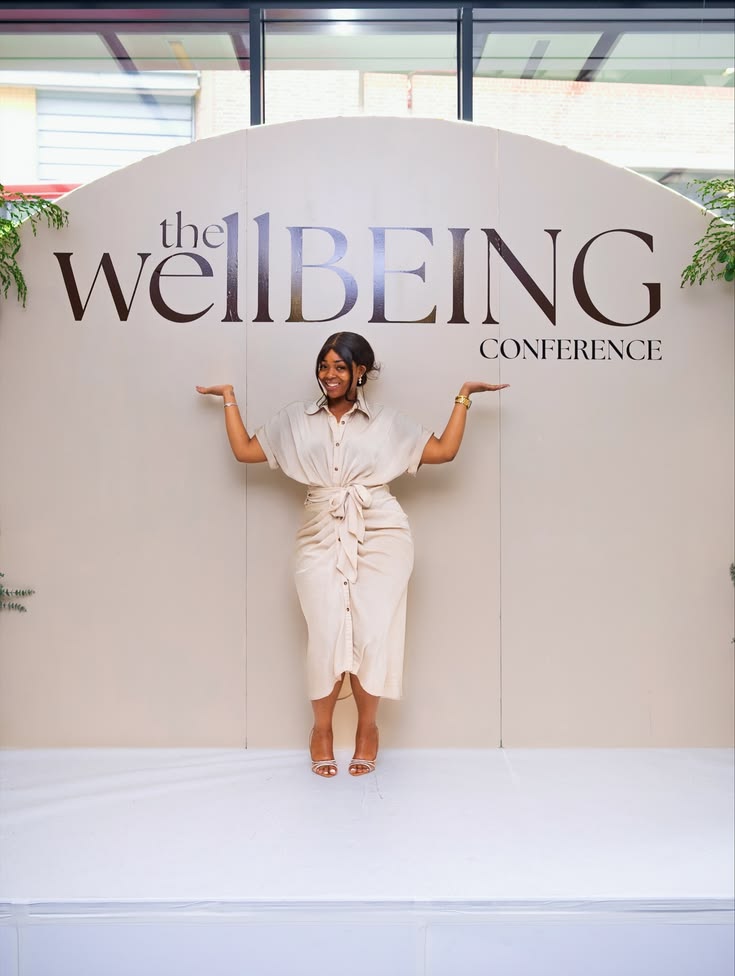
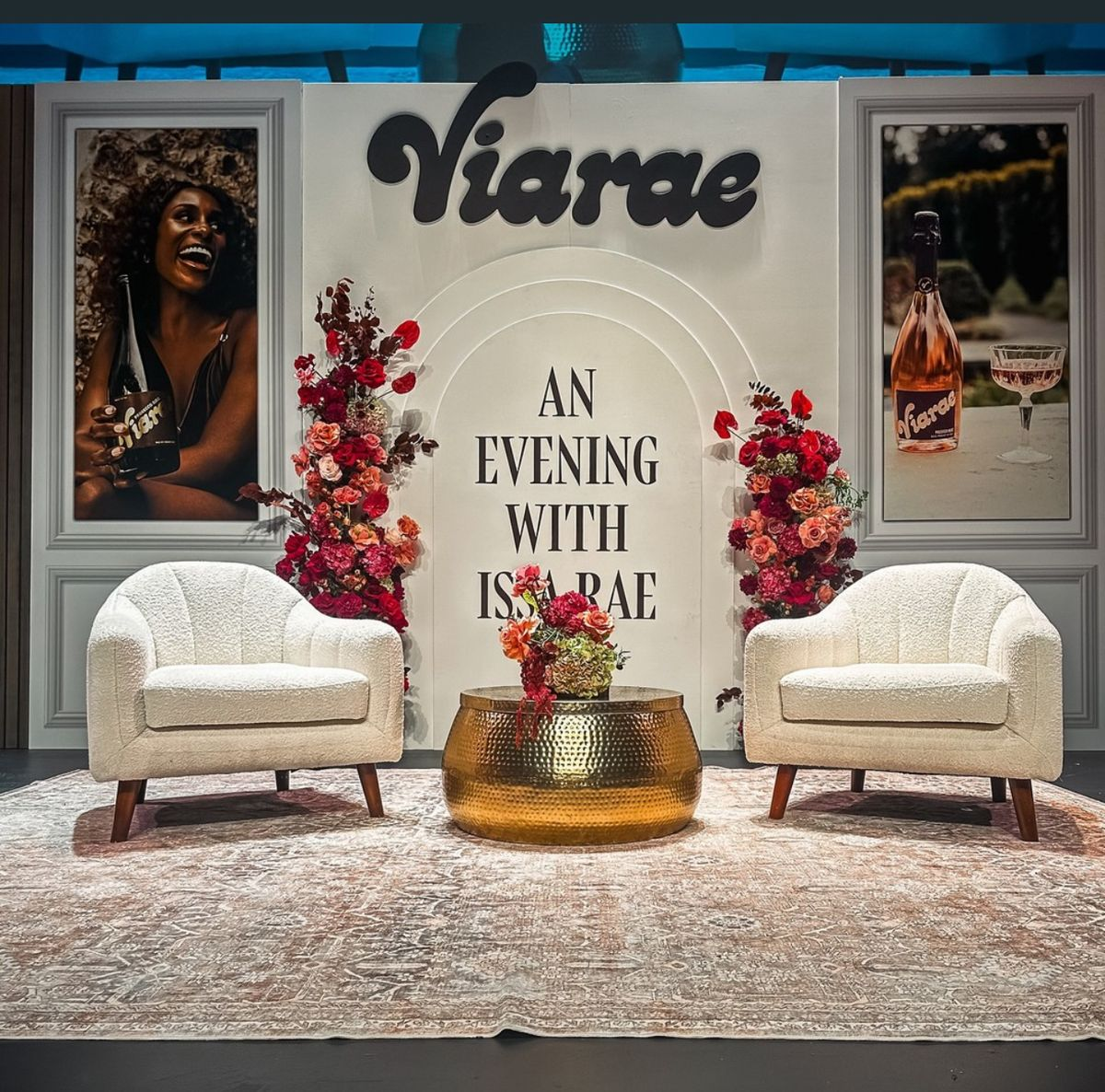
A large, clean backdrop with your logo and event name is the foundation. Keep the logo at eye level and leave breathing room around it so it reads from the back row.
2. Use layered lighting to set the mood
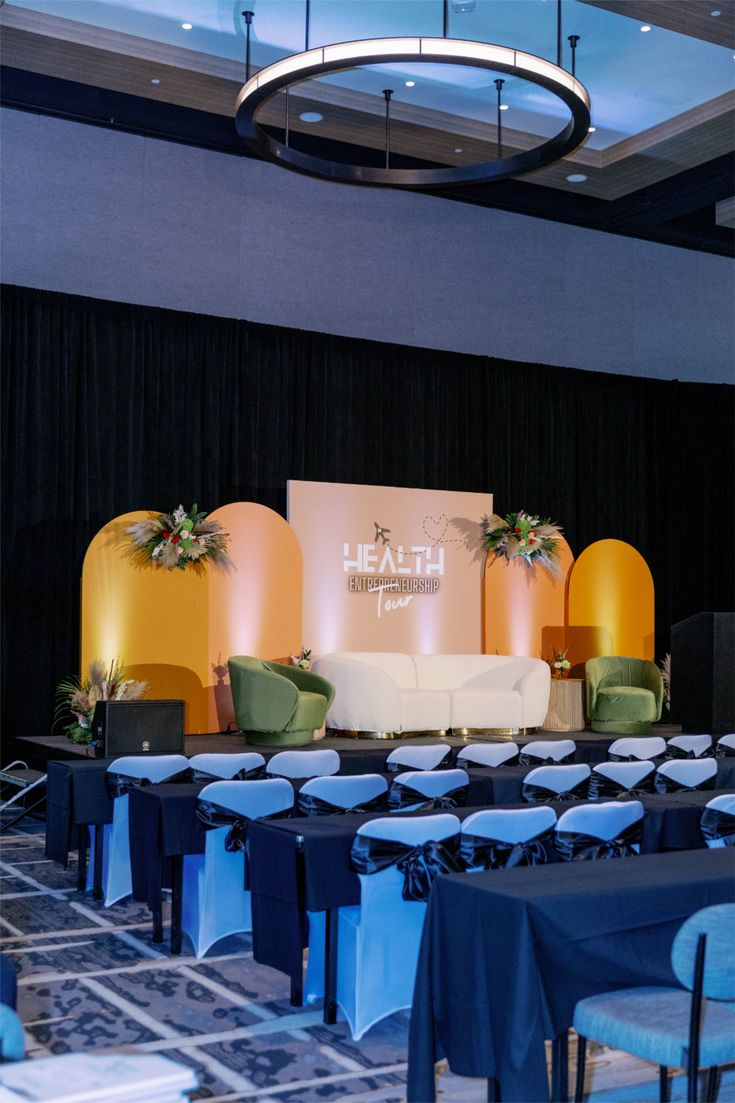
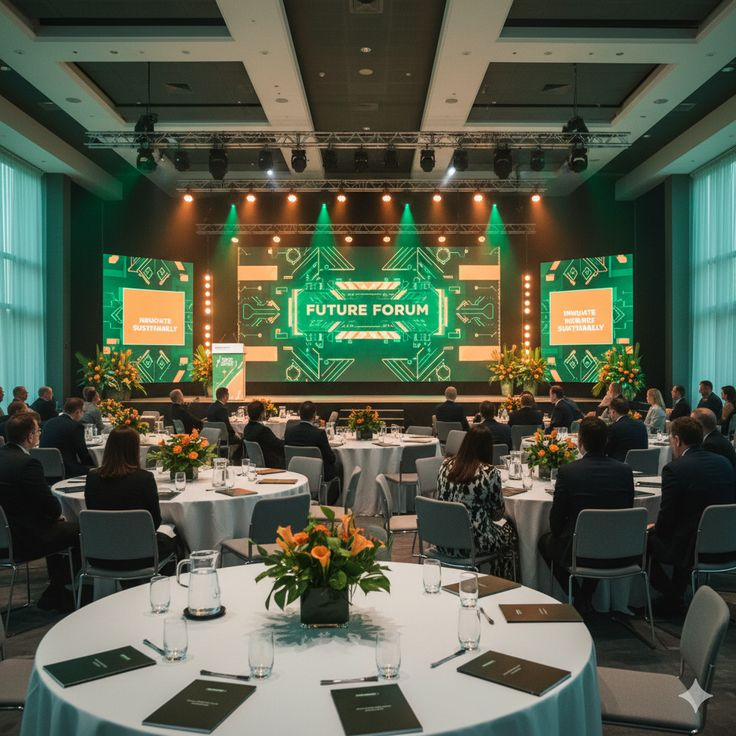
Lighting does more than illuminate. Warm front washes feel welcoming for keynotes, while cooler, moodier tones suit panels and workshops. Two or three lighting cues, planned in advance, make the room feel intentional.
3. Build height with risers and platforms
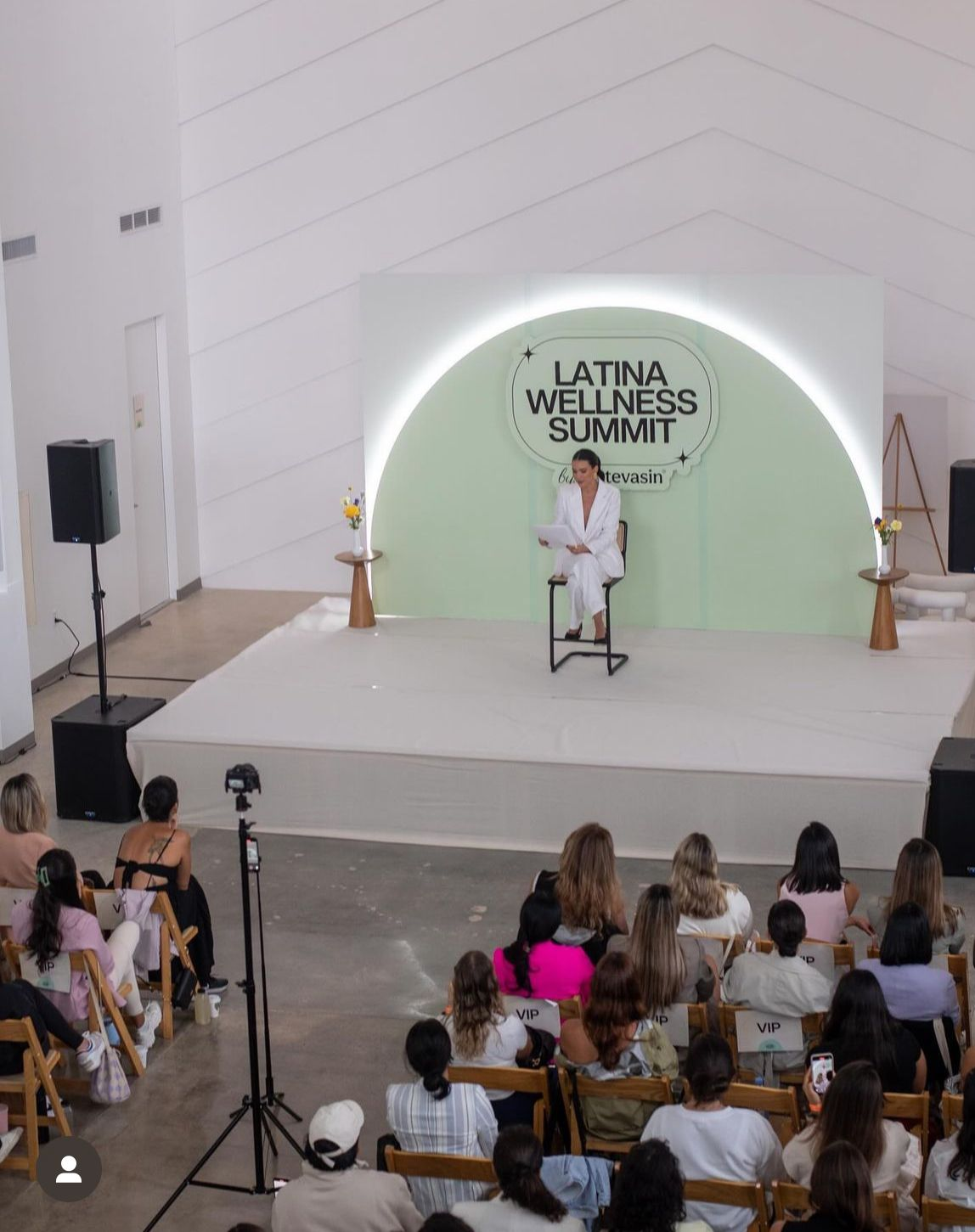
A tiered stage or a raised platform gives the room a focal point and helps everyone see the speaker. Even a single two-foot riser changes how the space feels.
4. Frame the speaker with a custom set piece
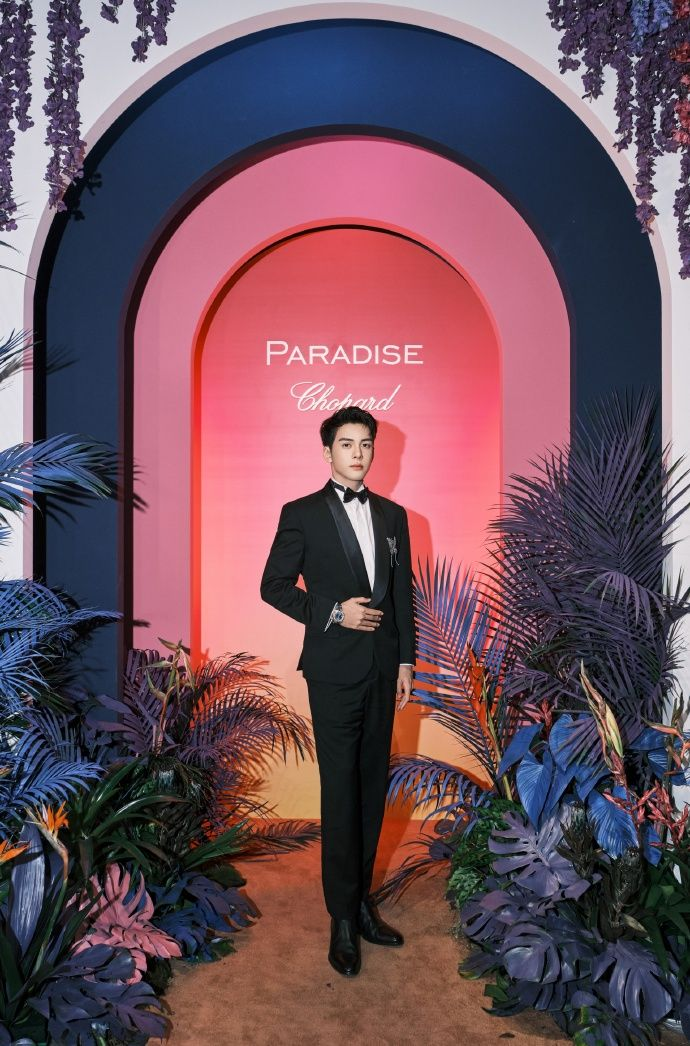
An arch, a panel wall, or an illuminated frame around the speaking area gives the stage a sense of architecture. It also works well for photos, which matters because attendees will share them.
5. Make the floral or greenery moment count
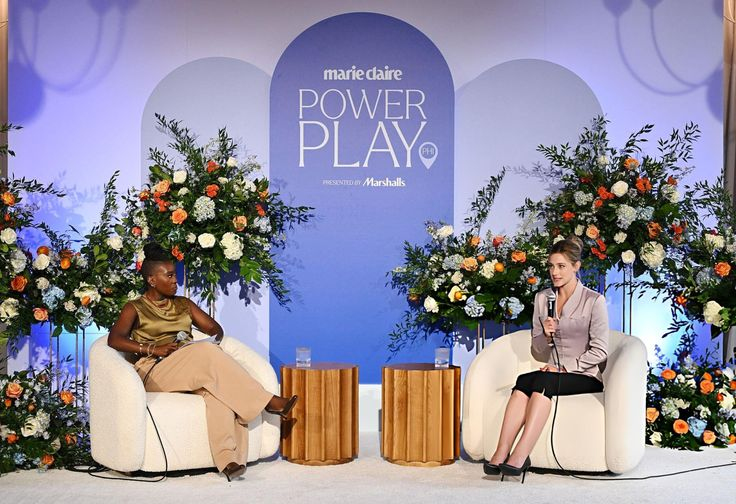
Live greenery, a few large arrangements, or a floral wall softens a room and adds warmth. Keep the arrangements low enough that they don’t block sightlines.
6. Use LED walls for motion and slides
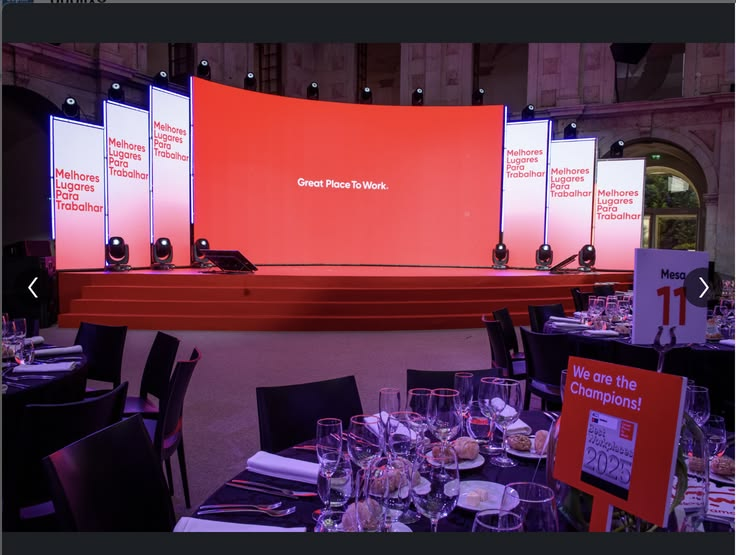
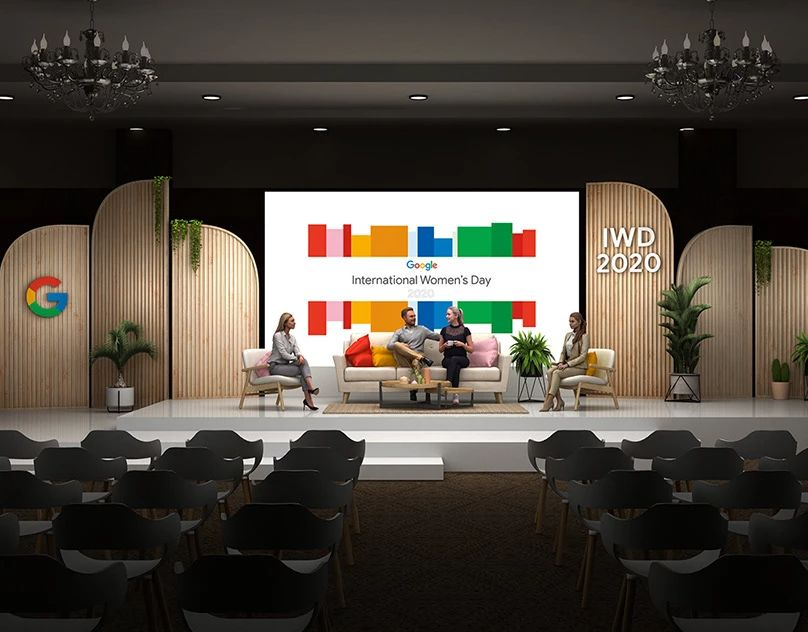
A large LED screen behind the speaker can show slides, brand animations, or live social media. Keep motion slow and text large so it’s readable from the back.
7. Design a branded photo moment
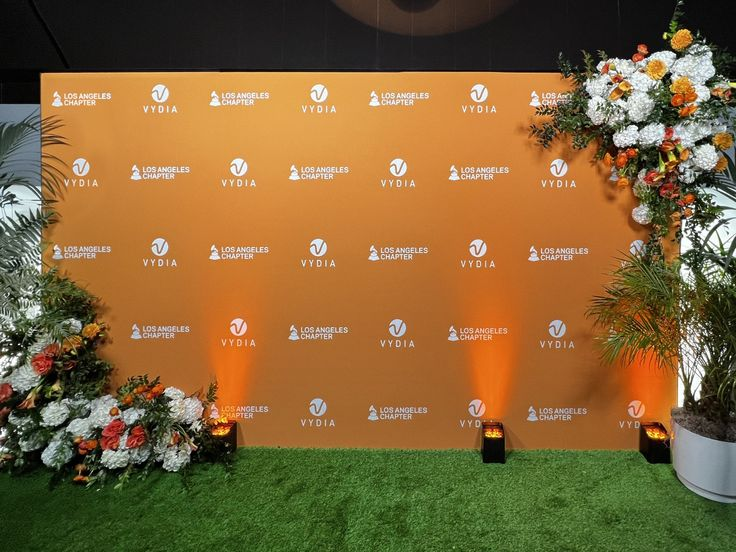
Create a stage-adjacent area with a backdrop or step-and-repeat where guests can take photos. This extends your brand reach far beyond the room, since attendees post what they’re proud of.
8. Choose furniture that matches the conversation
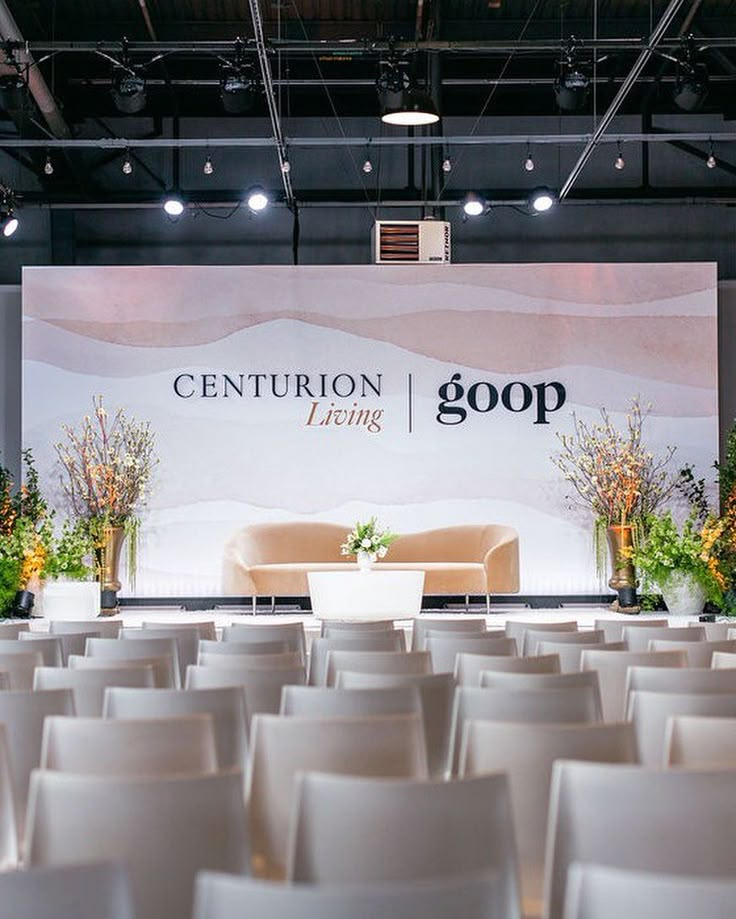
For panels, use chairs of equal height and a low table with water and notes. For fireside chats, a pair of lounge chairs and a rug create intimacy. The seating should fit the format, not just fill the space.
9. Keep the color palette tight
Two or three colors, carried through the backdrop, lighting, flowers, and signage, look deliberate. Too many colors make the stage feel busy.
10. Plan for the signage people actually read
Wayfinding, session titles, and sponsor recognition all live on the stage zone. Use large, high-contrast type and check it from the farthest seat in the room.
11. Test sightlines before the event
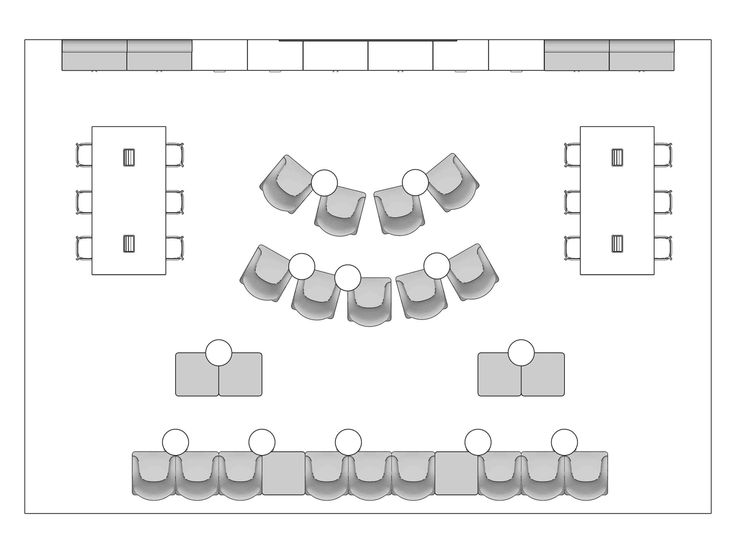
Sit in the back row and the side seats during setup. A beautiful stage that blocks the screen or the speaker’s face fails its purpose. Adjust height, screen placement, and lighting angles based on what you see.
12. Leave room for the unexpected
Build in one flexible element, such as a secondary screen, a movable set piece, or a spare lighting cue. Live events shift, and a stage with some room to adapt keeps the energy up when plans change.
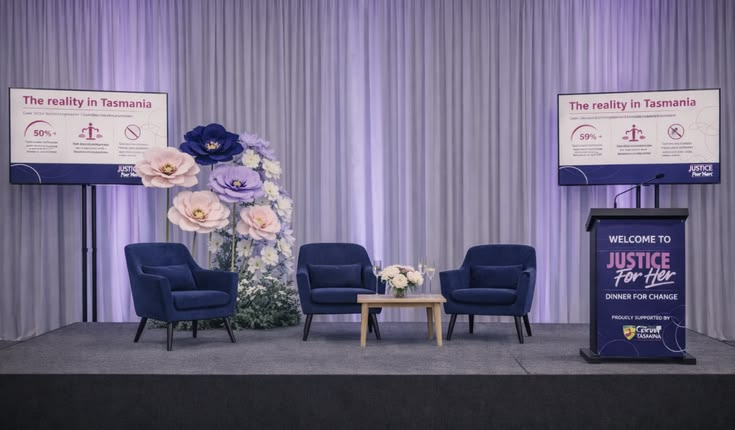
Make it yours
Stage design doesn’t need a massive budget. Start with the backdrop, lighting, and one signature element, then build from there. Your stage should look like your brand and feel like the experience you promised attendees.