
Finding a flattering makeup shade can feel harder than it should, especially when a product looks perfect in the tube and completely different on your face. For many Black women, the issue is not skin depth alone. The real problem often comes down to undertone.
Once you know if your skin pulls warm or cool, shopping gets easier, color matching gets faster, and your makeup starts to look more natural in daylight. This guide focuses on the decisions that make the biggest difference: base products, cheek colors, eye and lip shades, and the mistakes that throw everything off.
Why Undertones Matter Most
Your skin tone tells you how deep or light your complexion is. Your undertone tells you what sits underneath that surface color. Two women can both wear “deep” foundation, yet one needs golden pigments and the other needs red or blue-based pigments to look balanced.
That difference affects almost every step of your makeup routine. A warm undertone often looks healthier in golden, peach, copper, and terracotta shades. A cool undertone usually comes alive with berry, rosy, plum, and blue-red shades. If the undertone is wrong, foundation can turn gray, concealer can go orange, and blush can look pasted on instead of blended.
This matters even more on rich skin, because undertone mismatch tends to show clearly in natural light. Test makeup near a window, not under yellow bathroom bulbs. If your face looks dull, too red, or oddly pale compared with your neck and chest, check undertone before you blame the formula.
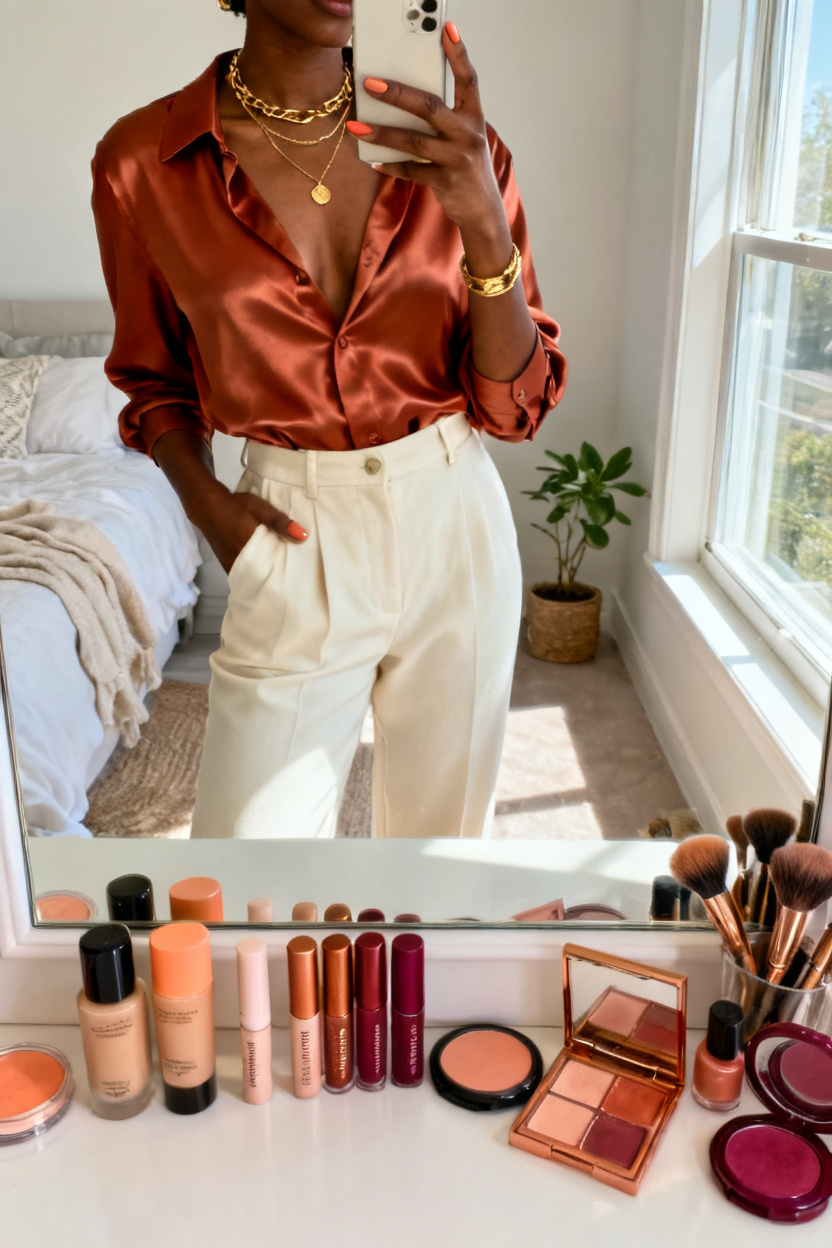
How to Identify Your Undertone
You do not need a makeup artist to figure this out. A few simple checks can point you in the right direction, and using more than one method gives better results than relying on a single test.
Look at your veins and jewelry
Turn your wrist over in daylight and look at the veins. If they appear more green, you likely lean warm. If they look blue or purple, you likely lean cool. If you cannot tell, you may be neutral or mixed.
Now try the jewelry test. Gold tends to flatter warm undertones, while silver often looks sharper on cool undertones. Put on one gold hoop and one silver hoop near a window and take a photo. The metal that makes your skin look brighter, smoother, and more even usually matches your undertone better.
Use foundation stripes, not a hand swatch
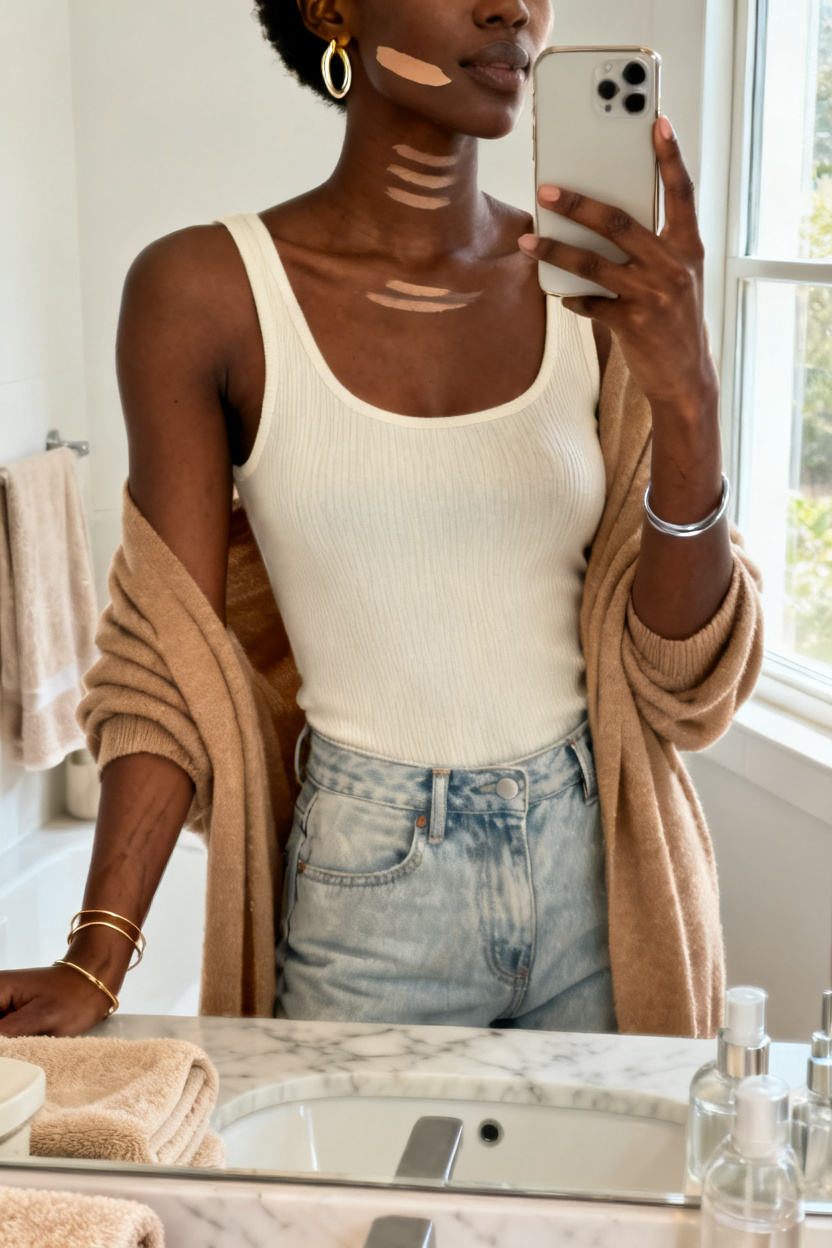
The best test is still foundation on your face. Swipe three close shades from cheek to jawline: one golden, one neutral, and one red or cool-toned. Let them sit for five minutes because some formulas dry darker.
The right match should almost disappear into both your cheek and jaw. Do not test on your hand. Your hands often carry a different tone from your face, especially if you deal with hyperpigmentation around the mouth or forehead.
If warm and cool shades both look slightly off, you may be neutral. In that case, start with neutral foundation and adjust the rest of your makeup with blush, bronzer, and lipstick.
Best Foundation and Concealer Matches
Base products need to match your undertone first, then your depth. That order helps you avoid the three most common problems on Black skin: ashiness, excess orange, and a red cast that does not match the body.
| Product choice | Warm undertones | Cool undertones |
|---|---|---|
| Foundation words to look for | Golden, warm, olive, honey, caramel | Cool, red, rosy, cocoa, neutral-cool |
| Common mismatch | Too orange or too yellow | Too gray or too red |
| Best concealer direction | 1 shade lighter with golden or peach base | 1 shade lighter with neutral or soft rosy base |
| Corrector for dark circles | Apricot or orange for medium-deep to deep skin | Peach-red or brick tones, used sparingly |
For foundation, swatch on the jaw and step outside with a mirror. Brands often label deep shades poorly, so the name can mislead you. Look at the pigment. Warm shades usually show more yellow or gold. Cool shades often carry red, blue, or rosy depth.
For concealer, go only one shade lighter under the eyes. Two or three shades lighter can create a gray cast around the edges, especially after powder. A good concealer brightens without turning chalky. If your under-eye area looks ashy, use a thin layer of corrector first, then apply less concealer than you think you need.
Blush, Bronzer, and Highlight Shades
Cheek products shape the whole face. Get these right, and your base looks more alive.
- Warm undertones: Choose terracotta blush, burnt orange, cinnamon, coral, and brick rose. For bronzer, look for red-brown or golden-brown shades, not muddy taupe. Highlights in gold, bronze, and champagne usually melt into the skin better than icy shimmer.
- Cool undertones: Pick berry blush, rosy plum, raisin, and soft wine shades. For bronzer, use neutral-deep browns with less orange. Highlights with rose gold, copper-pink, or soft pearl can look more natural than strong yellow gold.
- Placement tip: Put blush slightly above the apple of the cheek and blend back toward the temple with a dense angled brush. Try a brush like the e.l.f. Putty Blush Brush or Real Techniques 406 for better control on cream and powder formulas.
If your bronzer makes your skin look dirty, the tone is probably too gray. If your highlight looks like a stripe, spray your brush once with setting spray before applying. That small step helps the product sit closer to the skin.
Eye and Lip Colors That Work
Eyes and lips can either support your undertone or fight it. You do not need a huge collection. A few reliable shades will cover most everyday and evening looks.
Everyday eye makeup
- Warm tones: Try bronze, copper, warm brown, amber, olive, and chocolate eyeliner. A wash of copper shadow with brown liner and mascara works for work, brunch, and evening.
- Cool tones: Use plum, espresso, mauve-brown, charcoal, and burgundy. A matte plum in the crease with a soft shimmer on the lid gives depth without looking harsh.
Lip colors that balance the face
- Warm tones: Go for caramel nude, cinnamon, rust, orange-red, and warm berry. If a nude lipstick makes you look washed out, line your lips with a deep brown pencil such as chestnut or cocoa first.
- Cool tones: Choose rosy nude, blue-red, blackberry, plum, and wine. A cooler red often brightens the teeth and gives deeper skin a clean, polished finish.
Keep one simple rule in mind: match intensity, not just color family. Deep skin can carry rich pigment beautifully, so do not default to pale pinks or beige nudes. Build a small color palette of four lip shades and two eye looks that you know flatter your undertone, then repeat them with confidence.
Common Makeup Mistakes to Avoid
One common mistake is choosing foundation by depth alone. A deep shade with the wrong undertone will still look wrong, even if it seems close in the bottle. Always compare at least two undertones side by side on your jaw before buying.
Another mistake is using very light concealer to create a dramatic under-eye. On Black skin, that often turns gray after blending and powder. Keep brightening subtle, set with a tinted powder instead of a pale one, and press the powder in with a puff rather than dusting it everywhere.
Many women also use the same blush or nude lipstick their friend loves, then wonder why it falls flat. Undertone changes how color reads on the skin. A rosy nude on a cool undertone can look chic. That same shade may look chalky on a warm undertone, which usually needs more brown, red, or gold in the mix.
The easiest fix is to build your own shade reference. Write down your best foundation match, undertone, and the blush, bronzer, and lipstick shades that work. Save photos in daylight. That record turns random shopping into a repeatable system.
Makeup gets easier once you stop treating “deep skin” as one category. Warm and cool undertones change how every product sits on the face, from foundation to red lipstick. A few careful checks in daylight, plus smarter shade choices, can save money and cut down on trial and error.
Start small. Test your undertone this week, then adjust one part of your routine first, usually foundation or concealer. After that, swap in one better blush or lip shade. Those small changes tend to make the whole face look more polished, and they give you a routine you can trust every time you sit down at the mirror.