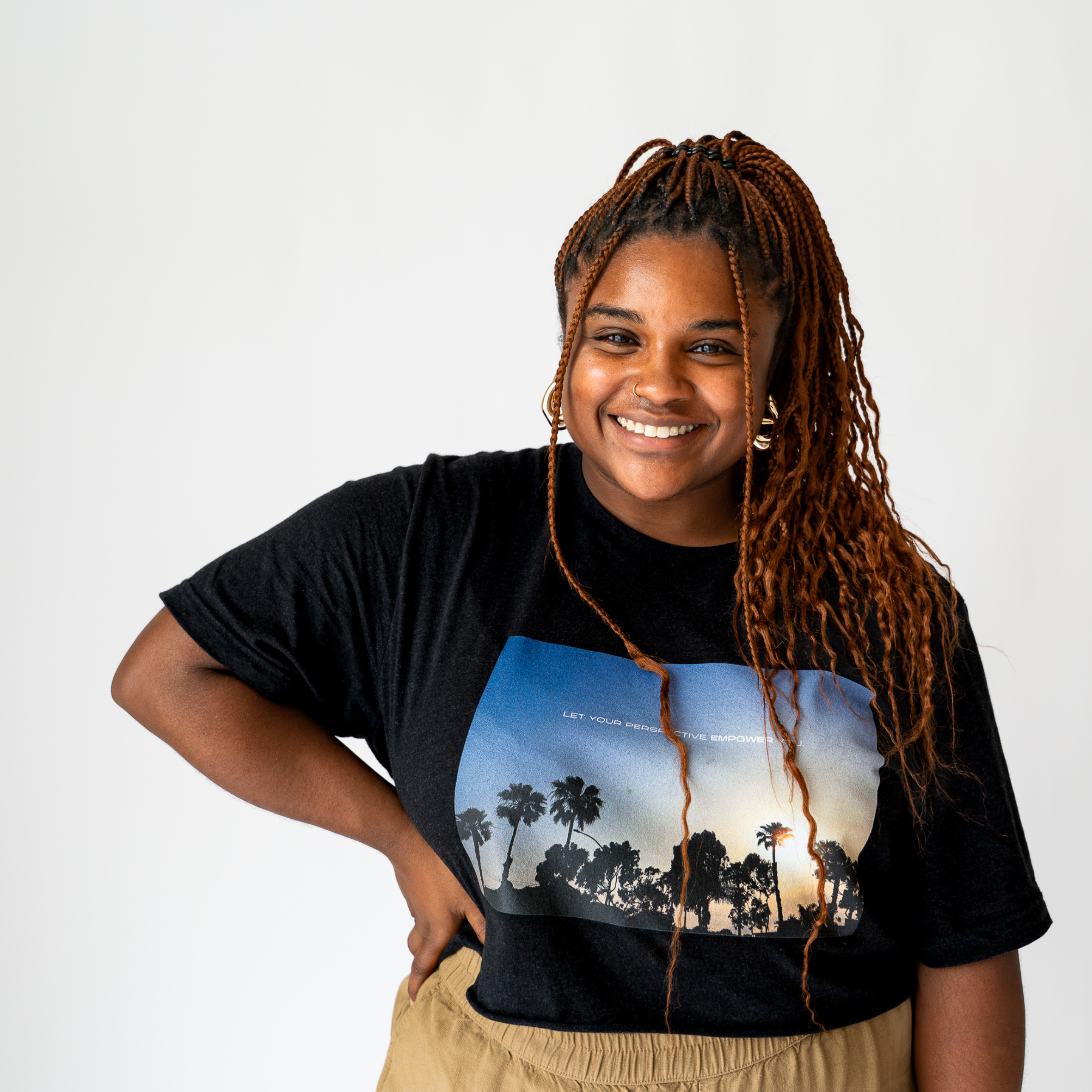
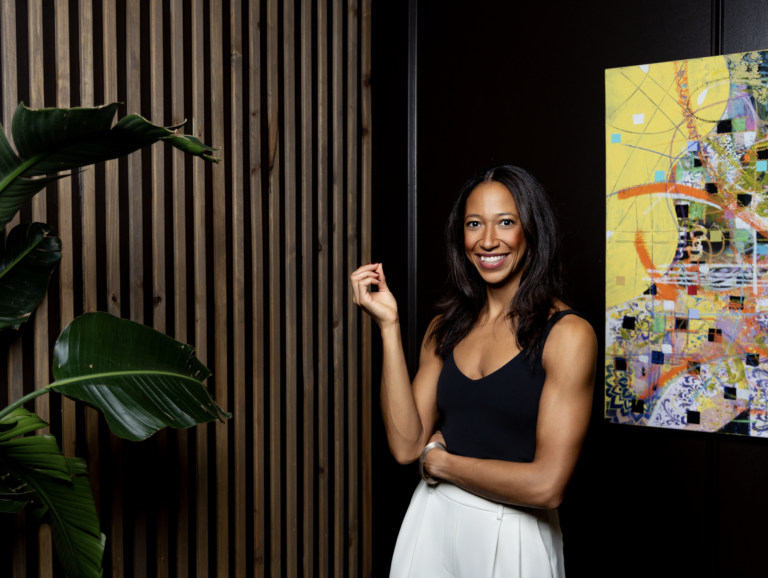
Gabrielle Wyatt is wearing a sweatshirt.
It is, on the surface, an unremarkable detail. A soft layer pulled on for an interview. But the words across the chest are the thesis of her life’s work: reflect, challenge, lead. They are stitched there from the first fellowship she ever created, before the Highland Project had a name, before Meet Me at the Highland, the podcast, before the Legacy Studio, before any of the structures she has spent six years building for BIPOC women across the country.
For years, she thought those three words belonged to her work. She has since learned they belong to her.
“Who we are with ourselves is how we are with everyone else,” she tells me, early in our conversation. It is the kind of line that lands differently depending on who is hearing it. A meditation if you are self-aware. A challenge if you are overextended. A permission slip, if you are exhausted. For Wyatt, it has become a working philosophy. The personal and the professional, she says, are now “inextricably linked.”
That linkage is the story.
The Investment Years, and What They Could Not Hold
Wyatt’s résumé reads like a blueprint for the kind of success Black women are told to chase. It is what happens when a woman who once shaped how hundreds of millions in philanthropic capital moved through the country’s education systems decides that the most radical thing she can do with what she knows is turn it toward Black women.
The first reckoning came in Newark.
“My reckoning that led me to philanthropy was rooted in a burnout event in Newark, New Jersey, working in the school district,” she says. “I was too young for that.”
There is no flourish in the way she says it, and the understatement is the point. A young Black woman, exhausted by a system she had given herself to, learning early what it costs to lead without a container for your own well-being. “It planted a seed about what it means to be a whole and well leader.”
So she went into philanthropy. Not to escape the work, but to do it differently. To, in her words, “reflect, challenge, lead capital, to have it look like us and hold our values.”
Then came 2020. The pandemic. The second reckoning.
“I saw too many Black and brown leaders burning out,” she says. “We challenge folks to plan seven generations forward, but we won’t get there if leaders aren’t sustained.” She paused, then said the thing that would change the trajectory of her career: “I might have to work outside the system to create a space where my community can thrive.”
The Highland Project was born from that sentence.
The Three Lies of Wealth
Ask Gabrielle Wyatt about the biggest lies around wealth, and she does not give you one answer. She gives you three.
The first lie: that if you don’t have wealth, it’s because you didn’t take responsibility for getting it. “Our polling of Black women voters showed that racism and discrimination are the top barriers,” Wyatt says, “not a lack of effort.” It is a quiet correction, but a seismic one. Generations of internalized blame, reframed in a single sentence as the structural condition it has always been.
The second lie: that wealth means becoming a billionaire. “We’ve learned wealth is more holistic,” she says. “Loving relationships, healthy food, fair wages, and the ability to invest in future generations.” It is a definition that asks the reader to pause and audit her own. What exactly are you building toward? And does the version of “rich” you have been sold actually belong to you?
The third lie: that wealth is individual, a zero-sum game where one woman’s win is another’s loss. “History shows that for Black Americans, creating and retaining wealth has always been a collective approach,” Wyatt says. The cooperative economics of the Black church. The mutual aid societies. The aunties who paid the tuition. The neighbor who watched the children so someone could work the second shift. The lie of individualism flattens all of that. The Highland Project refuses to.
Venture Philanthropy, and Why Charity Is Not Enough
If traditional philanthropy is a relief valve, the Highland Project is a redesign. Wyatt calls the approach venture philanthropy, and she is careful not to dismiss what came before it.
“Traditional charity is still needed, especially for immediate needs,” she says. “But Highland focuses on structural solutions that birth something new.”
The difference, she explains, is integration. Traditional philanthropy solves wealth issues in silos. Housing in one place, education in another, healthcare somewhere else. Highland weaves them together, and weaves the communities that hold them together, too. The goal isn’t just to fund a leader. It is to build the soil she is rooted in.
For Black women founders, a group the data consistently shows is over-mentored and underfunded, that distinction is not academic. It is the difference between another panel invitation and an actual check.
“First, by creating a community where you aren’t alone and can learn how others navigated that red tape without selling their integrity,” Wyatt says, of how the Highland Project moves capital toward Black women. That work happens inside Meet Me at the Highland, the podcast and gathering space where stories of both success and failure are kept on the record. “Second, we are legacy architects, focusing on how your unique way of leading embeds your legacy in the world.” And third, the resources, financial yes, but also the coaches, the board, the community itself, converge to “abundantly fund” the vision.
The operative word is abundantly. Not just surviving. Not barely enough. Abundantly.
The Legacy Studio, and the Right to Be Remembered
There is a particular grief that comes with watching your impact be rewritten or erased in real time. Black women have lived it for generations. The inventions credited to someone else. The movements led from the shadows. The labor folded silently into someone else’s story. The Legacy Studio is Wyatt’s answer to that grief.
“It continues the work of the podcast’s first season, The Breathing Season, which asked how we remember to breathe and begin again,” she says. The blueprints of whole leadership are being captured there. Not as monument, but as instruction. So the next woman does not have to start from zero. So that, as Wyatt puts it, Black women no longer have to “make a way out of nowhere.”
Season two of Meet Me at the Highland will focus on what she calls “nourishing the seed across generations.” It is a phrase that feels less like a tagline and more like a vow.
The Word for the Exhausted
Toward the end of our conversation, I asked Gabrielle what she would say directly to the woman reading this who is tired. The entrepreneur. The founder. The executive. The mother. The one waiting for the world to finally right her.
She gave two pieces of guidance, and they were smaller and softer than I expected.
“Look in the mirror today and ask, ‘Is there anything I need right now?'” she says. “If it’s accessible, go get it. Witnessing your own humanity is a legacy and rest practice.”
And then, come to Meet Me at the Highland. Practice a different way of leading. Do it in community.
That is the whole word. No hustle quote. No five-step framework. No promise that the next quarter will be different. Just see yourself. Tend to what you find. Don’t do it alone.
What She Is Actually Building
It would be easy to file Gabrielle Wyatt’s work under the familiar headings. Black women in philanthropy. The founder funding gap. Sustainable leadership. And then move on. But filing it that way misses what is actually being built.
The Highland Project is not a nonprofit in the conventional sense. It is a counter-architecture. A refusal of the lie that wealth is individual. A refusal of the lie that effort is the missing ingredient. A refusal of the lie that any single Black woman should have to invent her sustenance from scratch. It is what happens when a woman who once saw the challenges around school district funding decides that the most radical thing she can do with what she knows is redirect it. Toward her people. Toward her own breath. Toward the seven generations forward, she still believes in.
Wyatt’s sweatshirt was right. Reflect, challenge, lead. But the order matters. The reflection comes first. You cannot lead anyone, your team, your family, your industry, or your legacy to a place you have not first dared to lead yourself.
The Highland Project, in the end, is an invitation. To stop performing the lies you were told about wealth. To take leadership of your own body, heart, and soul. To meet other women who are doing the same. And to build, together, a version of legacy that is wide enough to hold all of you.
Gabrielle Wyatt is wearing a sweatshirt. It says everything.