
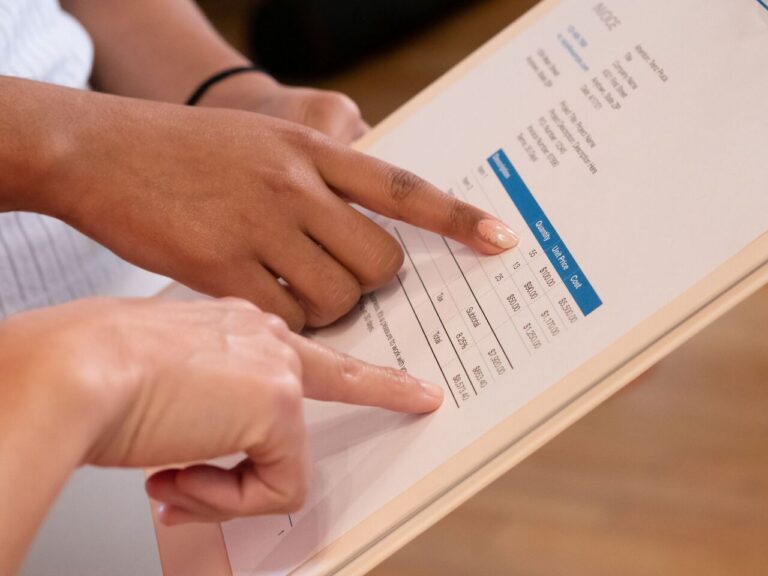
The invoices that you send after a job is done are technically free. After you’ve drawn it up, chased the client, and reconciled, you’re looking at over half an hour. Except nothing is free, because your time is worth something.
Given the solution is obviously not to send another invoice for the time spent wasting on your last invoice – you would enter an endless invoice inception. Instead, the solution is to spend less time on admin altogether, and more time on revenue-generating activity.
The paperwork tax hiding inside every job
FreshBooks’ 2026 State of Financial Flow survey found that service-based owners who spend 5+ hours a month on manual invoicing are nearly 3 times more likely to run into cash-flow trouble than those who don’t. More than half of small businesses hit at least one invoicing/payment snag in a given stretch.
On a single small service call, a few extra minutes of paperwork can actually be what’s quietly erasing the margin the job was supposed to protect. When small businesses account for almost half of US GDP, this productivity sink is genuinely impacting the broad macroeconomy.
Why the smallest jobs lose the most to it
Nearly 3 million U.S. construction businesses have no employees at all, which is around three-quarters of the industry, and over 90% of them are sole proprietorships.
That’s another way of saying that there’s no back office to absorb the cost. The late payment or a misfiled receipt is down to one person, the same person that does the manual job and who is tired when finishing up their day-end invoicing.
The trade itself is far from short on demand, that’s not a problem. The industry actually needed over 400,000 additional workers only last year, not to mention that a substantial proportion of the current workforce is nearing retirement within five years.
Yet, this strong demand relative to supply doesn’t help the paperwork. In fact, it only worsens it.
Getting a handle on it without becoming a bookkeeper
The fix, of course, doesn’t require a finance degree. Logging one week of admin activity in four rough categories (invoicing, payment follow-up, receipts, tax prep) is usually enough to show where the hours actually go.
Tools like InvoiceFly’s free invoice maker for contractors end up handling the invoicing without turning it into a second job. So it’s less about introducing new software or anything you need to get competent in and maintain; it’s more about reducing admin time and increasing consistency. The small habits add up.
The paperwork gap women in the trades are quietly carrying
Women made up 11.2% of the U.S. construction workforce in 2024. It sounds low but it’s actually the highest share in two decades.
But the growth is somewhat lopsided. Women hold just 4% of on-the-tools roles, meaning most of their jobs are instead in office, like admin and finance. These are the tasks eating into billable hours.
Plumbers and electricians earn good money, around a median of $63,000 to $64,000 a year. But women are being placed into back-office roles due to the administrative inefficiencies. It’s clear that the disproportionate brunt falling on women within this sector is a serious risk, and there should be a push towards on-the-tools roles with more efficient invoicing.