

Black women are the fastest-growing group of entrepreneurs in the United States, yet only 0.3% of venture capital reaches Black-owned startups. That gap between ambition and access is real, but it is not the end of the story. This guide is built specifically for you: a step-by-step roadmap that moves from your first business idea through funding, certification, and long-term growth, with resources designed to meet you exactly where you are. Because you deserve more than generic advice.
Table of Contents
- Understanding the unique challenges Black women face in entrepreneurship
- Laying the groundwork: Planning, validation, and resources you need
- Securing funding and growing your financial confidence
- Getting certified: Unlocking opportunities for Black women-owned businesses
- Scaling and thriving: Building your network, visibility, and impact
- The uncomfortable truth (and real freedom) about building as a Black woman
- Level up your business journey with BAUCE resources
- Frequently asked questions
Key Takeaways
| Point | Details |
|---|---|
| Acknowledge unique barriers | Black women face financial and visibility challenges but can still build thriving businesses. |
| Tap into specialized resources | Utilize SBA programs, business planning tools, and networks tailored for Black women. |
| Pursue certification | Official certifications can unlock contracts and growth opportunities. |
| Leverage community and mentorship | Support systems and mentorship accelerate growth and encourage resilience. |
| Define success on your own terms | Shape your business journey around your own values, goals, and definition of impact. |
Understanding the unique challenges Black women face in entrepreneurship
To take confident action, it helps to see the full picture first. Understanding the barriers is not about dwelling on obstacles. It is about walking into your entrepreneurial journey with clear eyes and a strategy that accounts for the real landscape.
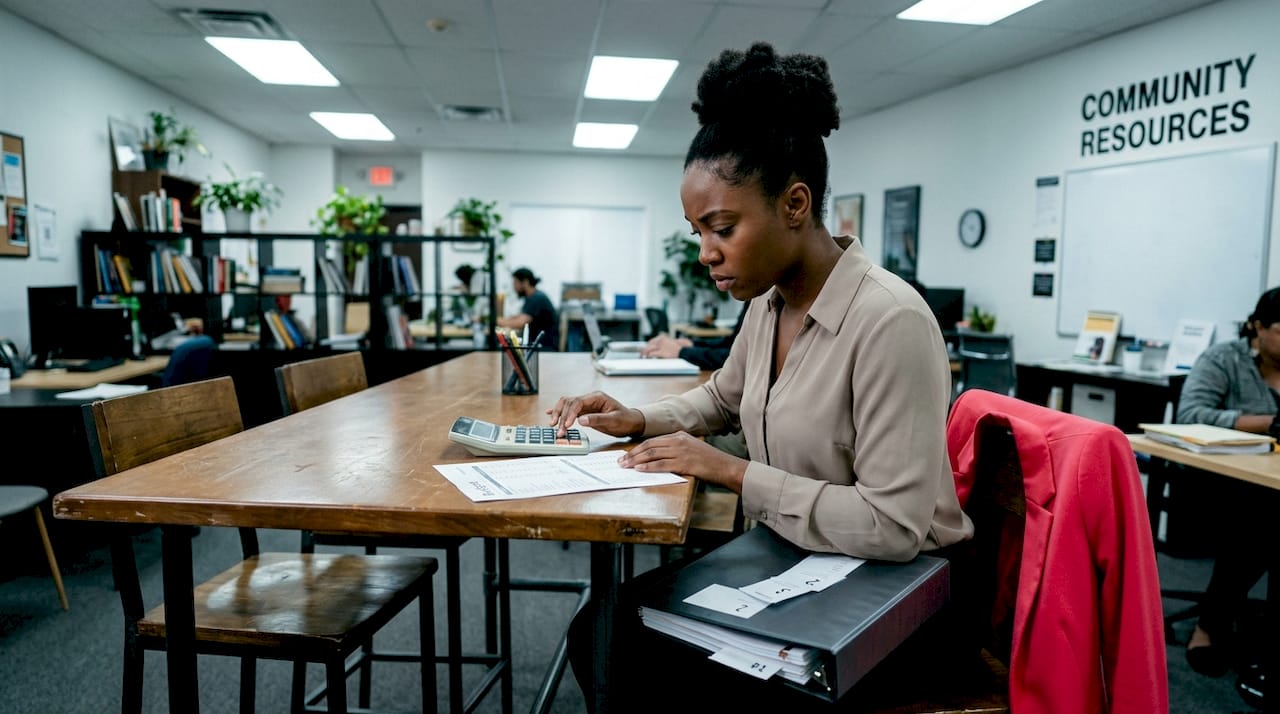
The financial gap is stark. Black-owned startups received only 0.3% of venture capital funding in 2025, and Black women entrepreneurs receive less than 1% overall. Traditional bank lending also presents challenges, with studies showing that Black business owners are denied loans at significantly higher rates than their white counterparts, even when controlling for credit scores and business performance.
| Challenge | Impact on Black women founders | Potential response |
|---|---|---|
| Limited VC access | Fewer growth-stage investment options | Grants, pitch competitions, community development financial institutions (CDFIs) |
| Loan denial disparities | Harder to access traditional startup capital | Microloans, SBA programs, crowdfunding |
| Reduced visibility | Less media coverage, fewer speaking invitations | Strategic PR, storytelling, platforms like BAUCE |
| Stereotype-based bias | Credibility questioned in some industries | Certifications, strong portfolio, peer networks |
Representation in mainstream business media remains uneven, too. When you rarely see yourself reflected in the stories celebrated by major outlets, it can quietly chip away at your sense of belonging in entrepreneurship. Reading media trailblazer stories from Black women who have broken through in high-visibility industries is a powerful reminder that your ambition is not out of place.
“The system was not built for us, so we build our own systems. That is not a disadvantage. That is innovation.”
There are also the quieter, internal battles. Many Black women entrepreneurs navigate self-image challenges that come from years of being told their ideas, their voices, and their visions are too niche, too bold, or not quite right for mainstream markets. Recognizing that narrative for what it is, a structural message, not a personal truth, is part of the foundation.
The strengths Black women bring to entrepreneurship are equally real. Resilience built through navigating complex systems. Deep community ties that translate into loyal customer bases. Creative problem-solving born from doing more with less. These are not consolation prizes. They are genuine competitive advantages, and the most successful Black women founders lean into them deliberately.
Laying the groundwork: Planning, validation, and resources you need
Now that you have seen the challenges, let’s jump into the critical first steps to turn your vision into a viable business.
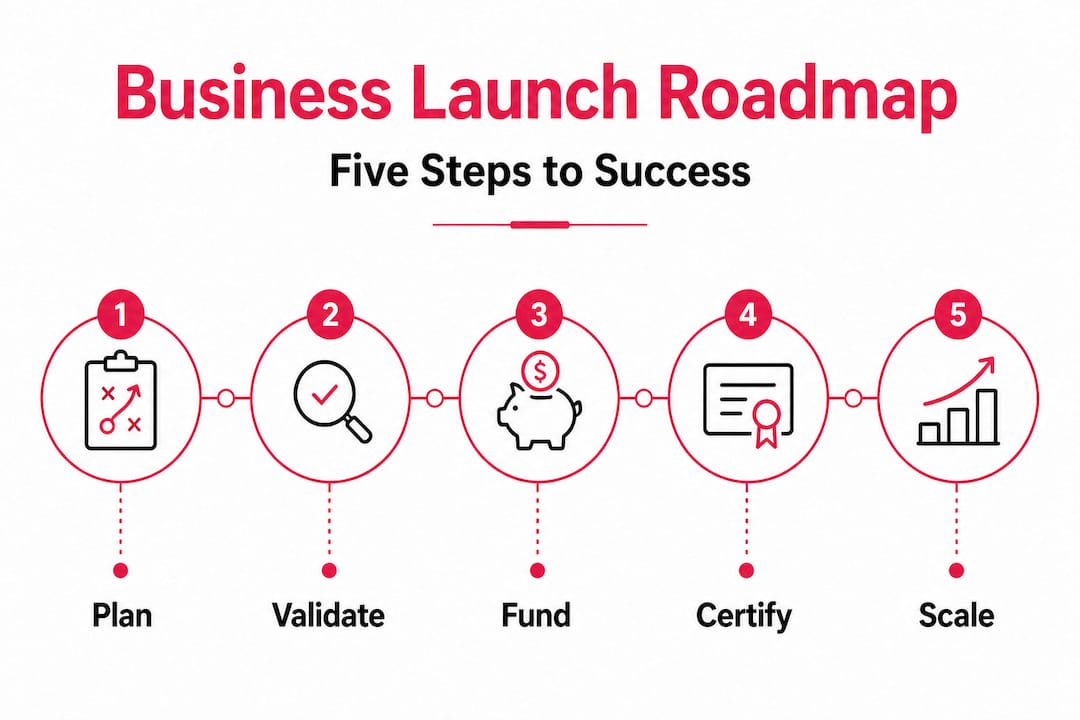
Every strong business starts with a clear, purpose-driven idea. Not just “I want to make money” but “I see a specific problem, I know who has it, and I have a solution that fits.” That clarity is your north star through every decision that follows.
Here is a practical sequence to move from idea to validated concept:
- Identify the problem you solve. Write one sentence that describes exactly who your customer is, what problem they have, and how your product or service fixes it.
- Research your market. Use free tools like Google Trends, Statista’s free reports, and social media listening to understand demand. Look at who is already serving this audience and where the gaps are.
- Talk to real potential customers. Conduct at least ten conversations with people who fit your target profile before you spend a dollar. Ask about their pain points, current solutions, and what they wish existed.
- Analyze your competition. Build a simple comparison chart of your top three competitors. Note their pricing, positioning, strengths, and weaknesses. Then define what makes your offer different.
- Write a lean business plan. You do not need a 50-page document. A one-page business model canvas covering your value proposition, customer segments, revenue streams, and key costs is enough to start.
| Free resource | What it offers | Best for |
|---|---|---|
| SBA Women’s Business Centers | Counseling, training, networking | Early-stage planning and mentorship |
| SCORE mentorship | Free expert mentoring from retired executives | Strategy and accountability |
| DreamBuilder (SBA) | Free online business training | Building foundational business skills |
| Canva | Free design tools | Branding, pitch decks, marketing materials |
| Google for Startups | Tools, training, and community | Tech-enabled businesses |
The SBA offers Women’s Business Centers across the country, providing free or low-cost counseling, training programs, and access to networks that can accelerate your early planning stages significantly. These centers are specifically designed to help women founders build strong foundations, and many have staff experienced in supporting minority-owned businesses.
Pro Tip: Before you register your business or spend money on branding, validate your idea by pre-selling. Offer your product or service to ten people before it officially exists. If they pay, you have proof of concept. If they hesitate, you have valuable feedback.
Understanding regional challenges specific to Black entrepreneurs can also sharpen your planning. The landscape for Black women founders varies significantly by geography, and knowing your local ecosystem, including which accelerators, CDFIs, and networks are active in your area, gives you a real advantage from day one.
Securing funding and growing your financial confidence
With your plan in hand, it is time to turn to one of the biggest hurdles for new entrepreneurs: finding and managing startup funding.
The funding landscape for Black women founders is challenging but far from empty. The key is knowing where to look and how to position yourself for the opportunities that exist.
Bootstrapping and self-funding strategies:
- Start lean. Validate your concept with minimum viable products before investing in full production or a polished website.
- Use revenue from a side hustle or current employment to fund early operations.
- Negotiate payment terms with suppliers to preserve cash flow in the early months.
- Consider a soft launch to a small, loyal community before a full public rollout.
Microloans and community lenders:
Community Development Financial Institutions (CDFIs) exist specifically to serve entrepreneurs who face barriers in traditional lending. Organizations like Accion Opportunity Fund, Grameen America, and local CDFIs offer microloans, often between $500 and $50,000, with more flexible qualification criteria than traditional banks.
Grants and pitch competitions:
This is where Black women founders have seen some of the most exciting momentum in recent years. Programs like the Fearless Fund (when operational), Hello Alice’s business grants, the Amber Grant for Women, and corporate-sponsored pitch competitions specifically target minority and women founders. Winning a pitch competition does more than provide capital. It builds credibility, visibility, and connections that compound over time.
The SBA ecosystem:
The SBA’s 8(a) Business Development program is a nine-year program designed for small businesses owned by socially and economically disadvantaged individuals. It provides access to government contracts, mentorship, and business development support. The Women-Owned Small Business (WOSB) Federal Contract program is another direct pathway to government procurement opportunities.
Stat to know: Despite Black-owned startups receiving only 0.3% of VC funding, Black women founders who access alternative funding pathways like grants and CDFIs report higher rates of business sustainability in the first three years.
Pro Tip: When pitching to funders, lead with your market data, not just your personal story. Funders need to see that there is a real, sizable audience willing to pay for what you offer. Your story adds emotional resonance, but numbers build confidence.
Building financial literacy alongside your funding strategy is equally important. Understanding cash flow, profit margins, and basic accounting from the start prevents the most common reason early businesses fail: running out of money while still technically profitable on paper. Tapping into community empowerment strategies and collaborative business networks can also open doors to shared resources, co-marketing opportunities, and peer accountability that reduce financial strain in the early stages.
Getting certified: Unlocking opportunities for Black women-owned businesses
Once stable financial footing is on the horizon, it is time to leverage structures that open up even more opportunity, like certifications.
Business certifications are official designations that verify your business meets specific ownership and operational criteria. They signal credibility to government agencies and corporations that have committed to diversifying their supplier base, and they open doors to contracts and grants that are specifically set aside for certified businesses.
Key certifications for Black women entrepreneurs:
- WBENC (Women’s Business Enterprise National Council): Widely recognized by Fortune 500 companies and government agencies as the gold standard for women-owned business certification.
- WOSB/EDWOSB (Women-Owned Small Business / Economically Disadvantaged WOSB): Administered through the SBA or WBENC at no cost via the SBA portal. Qualifies businesses for federal contract set-asides.
- NMSDC (National Minority Supplier Development Council): Certifies minority-owned businesses and connects them to a network of major corporations actively seeking diverse suppliers.
- 8(a) Business Development Program: SBA-administered, for socially and economically disadvantaged business owners. Provides access to sole-source contracts and mentorship.
According to Bank of America’s certification guide, certifications like WBENC, WOSB, and NMSDC can open access to government contracts, corporate supplier diversity programs, and specialized grant opportunities that are simply not available to uncertified businesses.
| Certification | Administered by | Cost | Primary benefit |
|---|---|---|---|
| WBENC | WBENC | Varies by revenue | Fortune 500 supplier access |
| WOSB/EDWOSB | SBA or WBENC | Free via SBA | Federal contract set-asides |
| NMSDC | NMSDC regional councils | Varies | Corporate supplier diversity |
| 8(a) | SBA | Free | Government sole-source contracts |
The application process, step by step:
- Confirm eligibility: your business must be at least 51% owned and controlled by a woman and/or minority individual.
- Gather documentation: tax returns, business licenses, operating agreements, proof of ownership, and financial statements.
- Choose your certifying body based on your target market (government vs. corporate).
- Submit your application and prepare for a site visit or interview in some cases.
- Maintain your certification through annual renewals and updated documentation.
The investment of time in this process pays off. Certified businesses gain access to contract pipelines that can transform a small operation into a multi-million dollar enterprise.
Scaling and thriving: Building your network, visibility, and impact
With credentials and capital, let’s explore how to create lasting impact and power your business toward ongoing growth.
Growth does not happen in isolation. The most resilient Black women entrepreneurs are not the ones who figured everything out alone. They are the ones who built the right rooms and stayed in them.
Here is how to build a network and visibility strategy that actually moves the needle:
- Join professional associations actively. NMSDC chapters, local chambers of commerce with diversity initiatives, and industry-specific associations all provide access to decision-makers and peers. Show up consistently, not just when you need something.
- Seek out mentors who have walked your path. The SBA’s Women’s Business Centers connect founders with experienced mentors. Look specifically for mentors who understand the intersection of race and gender in business, not just general entrepreneurship advice.
- Invest in your story. Media coverage, podcast appearances, and guest articles build social proof. You do not need a PR agency to start. Pitch your story directly to outlets that serve your community.
- Collaborate before you compete. Strategic partnerships with complementary businesses, especially other Black women founders, can expand your reach faster than any solo marketing campaign.
- Become a mentor yourself. Sharing what you know builds your reputation as a leader, attracts aligned clients and partners, and contributes to the ecosystem that supported you.
Pro Tip: Your personal brand is your business’s most durable asset. Document your journey, share your expertise, and show your process. Audiences connect with authentic builders, and that connection converts to customers, referrals, and opportunities you cannot buy.
Understanding how to stand out in a niche market is a skill that applies across industries. The entrepreneurs who thrive long-term are not the ones trying to appeal to everyone. They are the ones who own their specific lane with confidence and consistency.
The uncomfortable truth (and real freedom) about building as a Black woman
Here is what most business guides will not tell you: the conventional entrepreneurship blueprint was not designed with Black women in mind. The typical advice, raise VC funding, scale fast, exit big, reflects a very specific model of success that serves a very specific demographic. And following it without question can lead you away from the kind of business that actually fits your life, your values, and your community.
The real freedom in entrepreneurship, especially for Black women, is the freedom to define what winning looks like for you. Maybe that is a six-figure lifestyle business that gives you time with your family. Maybe it is a community-centered enterprise that prioritizes impact alongside revenue. Maybe it is a high-growth company that eventually raises institutional capital. All of those are valid. None of them requires your apology.
The entrepreneurs who sustain themselves through the hard seasons are the ones who have done the internal work alongside the external strategy. They know their own story, including the parts that were shaped by systems not designed for them, and they have decided to write the next chapter themselves.
The most powerful asset you have is not your business plan or your credit score. It is the community of people who genuinely want to see you win, who will share your work, challenge your thinking, and show up when things get hard. Build that community with the same intentionality you bring to your marketing strategy. It will outlast every trend and every algorithm change.
Level up your business journey with BAUCE resources
You have the roadmap. Now it is time to surround yourself with a community that fuels your momentum every single day.
BAUCE was built for exactly this moment in your journey. Whether you are looking for business inspiration to reignite your vision, practical strategies for developing a hustler mentality that keeps you moving through obstacles, or a broader hub of Black women business resources spanning finance, branding, and personal development, BAUCE delivers content designed to meet you where you are. Bookmark it. Share it with your circle. Come back every time you need a reminder that you are not building alone.
Frequently asked questions
What funding resources are specifically available for Black women entrepreneurs?
Options include SBA Women’s Business Centers, the 8(a) program, CDFI microloans, grants from organizations like Hello Alice and the Amber Grant, and pitch competitions specifically targeting minority and women founders.
How does certification help a Black woman-owned business compete?
Certifications like WBENC, WOSB, and NMSDC open access to government contract set-asides, corporate supplier diversity programs, and specialized grants that are not available to uncertified businesses.
What are the top mistakes to avoid when launching a business as a Black woman?
Avoid underestimating your startup funding needs, skipping the certification process, and trying to scale without a support network or mentor who understands the specific challenges you face.
Where can I find mentorship as a Black woman entrepreneur?
SBA Women’s Business Centers offer free mentoring, and organizations like SCORE, NMSDC, and WBENC connect founders with experienced advisors who specialize in supporting minority and women-owned businesses.
How can I build community and network with other Black women business owners?
Attend local and national workshops, join professional associations like NMSDC or WBENC, participate in online communities, and engage consistently with platforms like BAUCE that center Black women’s entrepreneurial journeys.