
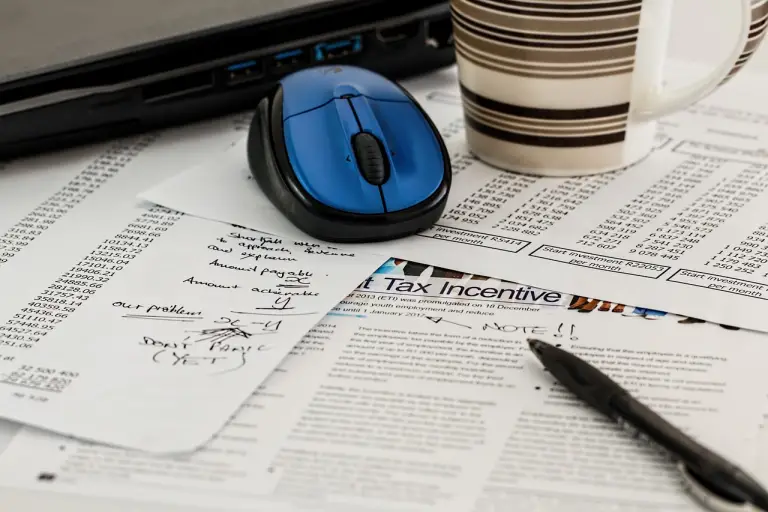
Paying taxes on time is something that everyone tries to do every year. Unfortunately, this isn’t always possible. Whether someone loses a job, has a medical emergency, or experiences another kind of hardship, they may struggle to pay all of the taxes they owe.
This goes not only for individuals who are classified as employees, but also individuals who own their own businesses. If you owe taxes to the IRS as a business owner, you need to make an effort to pay them back or the penalties and interest can begin to mount.
Things might feel hopeless at times, but there are solutions out there that can help you deal with these back taxes. Without any further ado, let’s go over some of the best ways to settle your back taxes with the IRS as a small business owner.
Use a Payment Plan
One of the first things you should consider learning about when you are experiencing tax issues is the IRS Fresh Start Program. It is a program aimed at helping those who have struggled to pay off their taxes.
Some of the biggest initiatives in this program are the payment plans that the IRS offers. These allow you to pay back your taxes over time, instead of having to do it in one large lump sum payment.
There are short-term plans for up to 180 days, and then long-term plans for longer than that. If you have a long-term payment plan, you will generally agree to a monthly payment that you will send to the IRS.
By using one of these payment plans, you can dramatically simplify your payment and make it a lot easier to stomach. It is a lot less overwhelming to send $1000 a month for a year than it is to send $12,000 at once.
Before you focus on one of these payment plans as the solution to your issue, you need to make sure you qualify for them. To qualify for a short-term plan, you need to owe less than $100,000 to the IRS, and to qualify for a long-term plan, the amount needs to be under $50,000.
This includes not only the taxes themselves but also the penalties and interest. If you owe over $100,000 total, getting a payment plan can be a lot more challenging.
Make an Offer in Compromise
In addition to creating a payment plan with the IRS, there is also the option of making an offer in compromise. This is when you make them an offer to settle your tax debt for less than the total amount. For example, if you owe $25,000 to the IRS, you could make an offer to pay them $17,000 instead.
This option has the potential to save you thousands, depending on how much you are able to reduce the amount owing. Keep in mind that you will need to be able to prove to the IRS that you cannot pay your taxes in full. If you simply ask to pay less, even though you can afford it all, they are unlikely to accept your offer. Also, the IRS isn’t required to accept your offer, so make sure it is a fair one.
Borrow Money
If you are unable to use either of the previous methods or don’t believe they are the right choice for you, another option is to find ways to borrow the money to pay the back taxes. You can borrow in the form of a personal loan, take money from friends or family, or even use a line of credit.
Another option is something like a 401(k) loan, which can be a relatively inexpensive option as long as you pay it back to keep your retirement goals and savings on track. You have several options to consider depending on your situation and how much you owe.
Once you have borrowed the money, you will likely need to pay it back, so be careful where you borrow from and always know the terms and rates before you decide to sign anything. The fees and costs of borrowing can vary widely, and always use your best judgment when choosing where you get the money you need.
Currently Not Collectible Status
If you cannot currently settle your tax debt because it will stop you from paying your basic living expenses, you can attempt to get your account put into Currently Not Collectible (CNC) status. This will stop the IRS from attempting to collect and will prevent them from doing things like levying income or assets.
However, it is important to be aware that if your account gets put into CNC, that doesn’t mean the debt is eliminated or forgiven. Things like penalties and interest will still accrue, and you could be responsible for them in the future. So while this is an option, it can certainly be an expensive one as your penalties and interest will continuously grow. The IRS will also make an effort to collect the balance if your finances improve, so keep that in mind, as well.
Talk to an Expert
With there being several potential options available and lots to consider, it often makes sense to reach out to an expert in your area for help. They can help you evaluate options, come up with a good offer if you want to make an offer in compromise, and can generally help you navigate through this difficult situation.
Even if you only have a few meetings with them, having someone knowledgeable in your corner to bounce ideas off of and ask questions can be incredibly helpful.
Of course, always work with someone who is reputable, experienced, and has knowledge in the area. Be sure to look them up online and check out any ratings or reviews to see what experiences other individuals have had.
In conclusion, we hope that this article has helped you learn some of the best ways to settle and deal with your back taxes as a small business owner.