
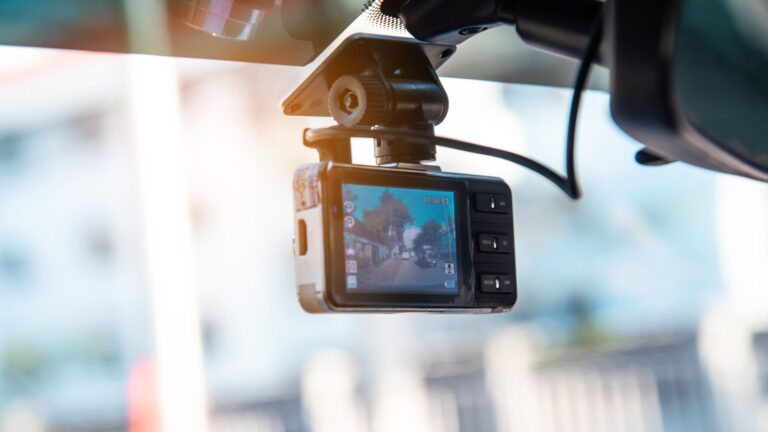
Car accidents are very challenging situations, and in this case, every single detail matters. That’s why you want to acquire as much evidence as you can. That evidence will help you when filing a claim to the insurance company. Plus, if you sue the other party involved in the accident, it will be much easier to prove they are wrong, which is crucial to take into account here.
Does surveillance and dashcam footage matter?
The short answer is yes, they matter, and a lot of the time, those can be used in court or when you file a claim. They help establish who caused the accident, show the lane positions, speed and traffic signals, while also capturing any dangerous driving behavior.
Plus, dashcam or surveillance footage will confirm visibility and weather, disapprove false statements from drivers, support/contradict the police reports, while also reducing disputes and strengthening any settlement negotiations. Overall, it makes sense to have dashcam and surveillance footage, and using it for a claim or lawsuit will help a whole lot more than expected.
What kind of video footage can you use?
- Dashcam footage is very handy because it can showcase the crash itself, but also moments leading up to the accident. It can also highlight driver behavior, and any audio statements made after the crash. It’s possible to use footage from both drivers.
- Surveillance footage might come from different sources. These can include parking garages, traffic cameras, apartment complexes, home security systems, city or government-owned cameras and so on. That footage is very helpful when it comes to capturing the collision from various angles.
Is this type of footage admissible in court?
For the most part, yes, although the footage needs to meet some legal requirements. For example, it must be relevant to the case, but also authentic and clear enough. It also needs to be lawfully obtained and adequately preserved, too, something that does matter quite a bit.
The attorney will be able to authenticate footage via device metadata, testimonies from the camera owner, documentation for the chain of custody and so on. That will help immensely, while offering continual and very consistent results.
Now the question is, can the dashcam footage be used against you? Of course, because video evidence goes both ways. If you were distracted while driving, speeding, rolling through stop signs or engaged in aggressive driving, then the footage can be used against you. Just like you can show the situation with footage, the other side can do the same as well. That’s why you shouldn’t always assume the footage will automatically help your case.
Does the video evidence affect insurance claims?
You want to hire a great Boca Raton Car Accident Attorney that can help you create and tackle the insurance claim, where possible. Insurance adjusters will rely on video evidence to determine claim value, comparative negligence, liability and fault. Having video evidence leads to faster resolutions, less disputes, strong settlement offers and a low litigation risk.
Preserving footage
A very good rule of thumb is to make sure that you download the footage and store it locally on multiple devices, maybe even in the cloud. Otherwise, the footage gets overwritten in a few hours or days. And that’s something to avoid.
What you can do is remove the memory card, avoid altering or editing the footage, and keep the entire footage intact where possible. You should also try to request any surveillance footage from nearby cameras, where you can. It’s a good idea to always access the footage and preserve it, without altering in any way.
Legal considerations
Using dashcams is legal in most states, although the legal aspect regarding audio laws will vary quite a lot. If the footage is captured in public areas from surveillance cameras, that’s usually admissible in court, something you do want to keep in mind. Getting footage like this might not seem like a lot, but as your attorney will tell you, this can absolutely change everything in a legal case.
You always want to make sure that the footage is acquired legally. And of course, it should not be doctored in any way. Otherwise you will encounter all kinds of potential issues, and that’s certainly a thing you want to avoid. Taking all the legal considerations into account is important, as the last thing you need is a legal issue.
Conclusion
Clearly, dashcams and surveillance footage can be extremely effective in the court of law. That being said, the footage needs to be authentic and not edited in any way. Plus, you need to act fast, because dashcams and cameras can overwrite or remote the footage within a few hours or a day. However, if you acquire and preserve the footage, that can be extremely helpful.